Varicose Veins in Pregnancy: What's Normal and When to Get Them Checked
Share
I didn't get varicose veins in either of my pregnancies. My sister did.
Hers were on her legs. They didn't hurt. But noticing them was worrying, she didn't like how they looked, and when your body already feels like it belongs to someone else, that kind of thing knocks your confidence. Quietly, every time you get dressed.
Neither of us really knew it was a pregnancy thing. So here's what I wish we'd both read at the time, with the facts taken from the NHS and linked at the bottom.
What are varicose veins?
Varicose veins are swollen, widened veins that sit just under the skin. They can look twisted or lumpy and can bulge a little. They happen when the tiny valves inside a vein stop working properly, so blood collects instead of flowing back up, and the vein swells.
The NHS describes them in pregnancy as something that can be uncomfortable but isn't harmful. They most commonly show up on the legs. They can also appear around the vaginal opening (the vulva), which nobody warns you about.
Pregnancy is one of the known things that makes them more likely. Others include standing or sitting for long periods, carrying extra weight and a family history of them.
Spider veins (the fine red or purple lines) are different, and usually harmless.
What do they feel like?
Some women feel nothing at all, like my sister. Others notice:
- aching, heaviness or pain in the legs
- itching, dry skin or colour changes over the veins
- swollen ankles or legs
It's often worse after a long day on your feet and better when you rest with your legs up.
Will they go away after the baby is born?
The NHS says varicose veins that appear in pregnancy usually get better after the birth, and often go away. Treatments like procedures or surgery are not usually recommended while you're pregnant.
What the NHS says can help
- Try not to stand for long stretches.
- Don't sit with your legs crossed.
- Put your legs up whenever you can.
- Sleep with your legs raised, on a pillow or with books under the foot of the bed.
- Do foot exercises, and keep up gentle activity like walking and swimming.
- Try to avoid putting on more weight than you need to.
The NHS also says you can try compression stockings, which most pharmacies sell. They won't prevent varicose veins, but they can ease the symptoms. They aren't suitable for everyone (for example if you have problems with blood flow in your arteries), so ask your midwife, GP or pharmacist before you buy.
The bit about confidence
This is the part the leaflets skip. You might be told they're nothing to worry about, and medically that's usually true. It doesn't stop you looking at your legs and feeling like you've lost another bit of yourself.
You don't have to love them. You don't have to hide either. If covering up makes you feel more like you, cover up. If shorts and bare legs make you feel like you, wear the shorts.
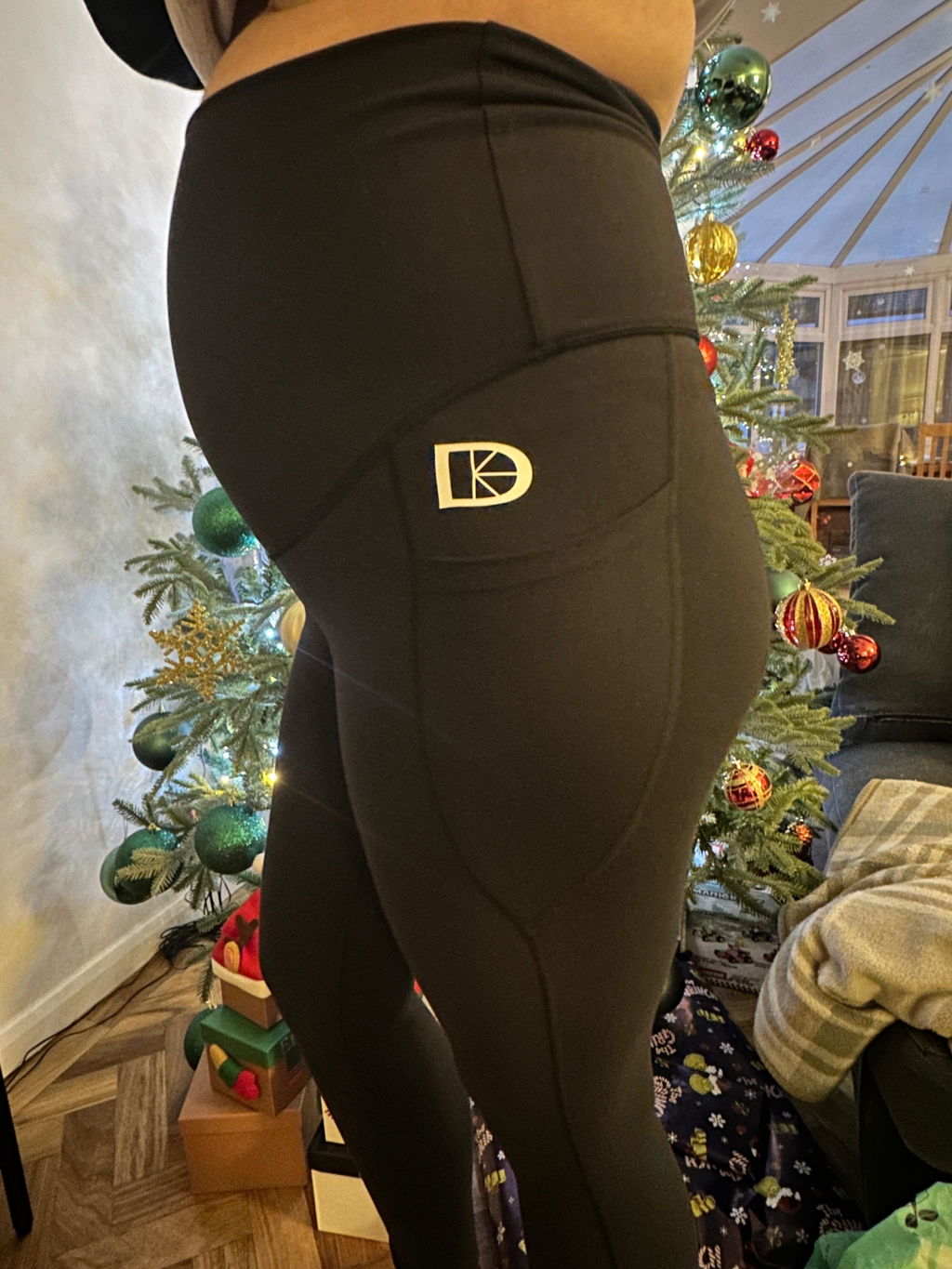
I'll be straight with you about leggings, including mine. Our Active Support Leggings are not compression wear. They don't treat, prevent or ease varicose veins and I'm not going to pretend they do. What they are is a high waisted, squat-proof, never see-through pair you can live in, so getting dressed is one less thing to think about.
When to speak to your midwife or GP
The NHS says to see a GP if:
- you have pain, itching or swelling in your legs
- you have a sore on your leg that hasn't healed after 2 weeks
- your varicose veins are getting worse
Get an urgent GP appointment or call NHS 111 if a varicose vein is bleeding.
One more, because it matters. Being pregnant, or having had a baby in the last 6 weeks, raises the chance of a blood clot in a deep vein (DVT). The NHS signs to know are throbbing pain in one leg (usually the calf or thigh), swelling in one leg, red, blue or darker skin around the sore area, and swollen veins.
- If you think you might have a DVT, ask for an urgent GP appointment or call NHS 111. If you're pregnant you can also call your maternity unit (or early pregnancy unit if you're under 20 weeks).
- Call 999 or go to A&E if you have leg pain and swelling and you feel short of breath or have chest pain. Don't drive yourself.
Questions people ask
Are varicose veins in pregnancy dangerous?
The NHS says they can be uncomfortable but aren't harmful. Look out for the signs above, especially bleeding or the DVT signs, and get them checked if anything changes.
Do varicose veins go away after pregnancy?
They usually get better after the birth and often go away.
Can you get varicose veins in your vulva during pregnancy?
Yes. The NHS lists the vaginal opening (vulva) as somewhere they can appear. If you notice them, mention it to your midwife.
Do compression leggings prevent varicose veins?
The NHS says compression stockings won't prevent them, but can ease the symptoms. Regular leggings, including ours, are not compression wear and not a treatment.
Can I still exercise with varicose veins?
Gentle activity like walking and swimming is one of the things the NHS suggests. If your legs are painful or swollen, check with your midwife or GP first.
If this was you (or your sister, or your best friend), tell me in the comments on Instagram. I had no idea how many of us it happens to until I started asking.
Natalie
This post is for general information and isn't medical advice. If you're worried about anything in your pregnancy, speak to your midwife or GP.
Sources: NHS: Common health problems in pregnancy, NHS: Varicose veins, NHS: Deep vein thrombosis (DVT).